Dental implants and tooth replacement

Dental implants in Vaucluse and Rose Bay

Implants to replace one tooth, several, or a full arch, with consultations at either of our clinics. We plan from 3D imaging, weigh implants against bridges and dentures with you, and set out every stage and its cost in writing before treatment is scheduled.
  • Two clinicsVaucluse and Rose Bay
  • PlanningCone beam CT imaging and a digital plan
  • Your quoteWritten and itemised, before treatment
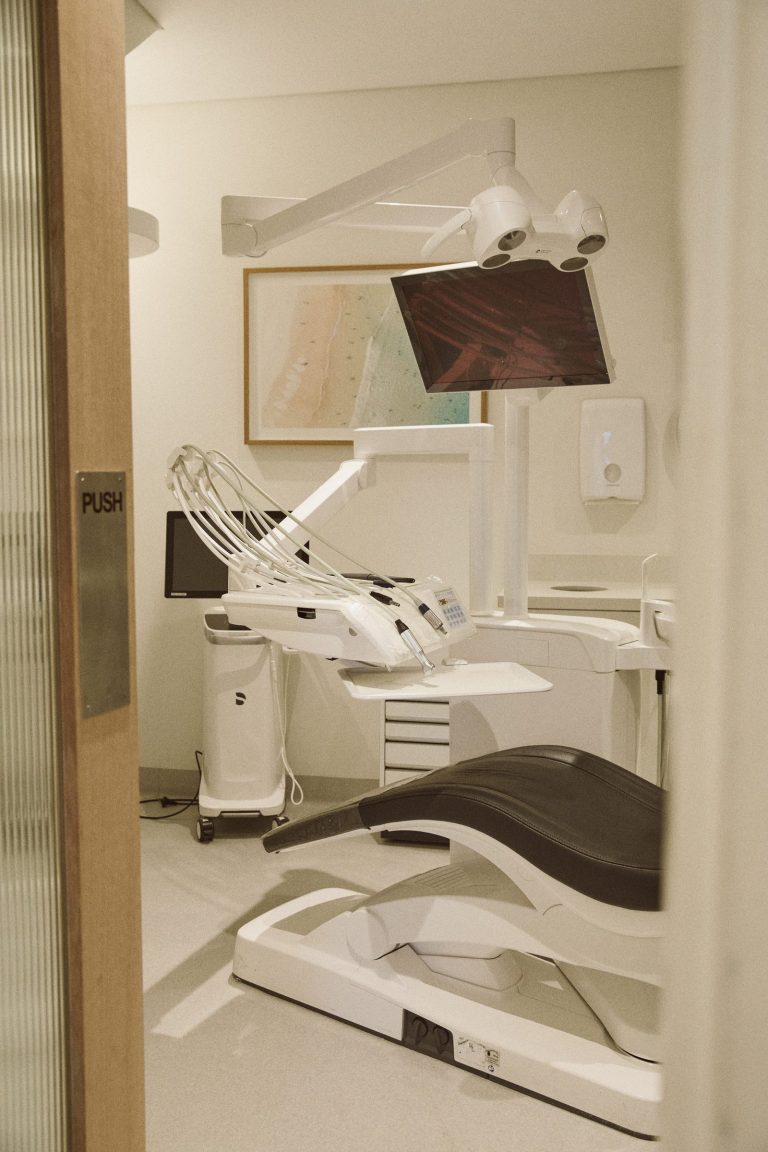
A treatment room at Dental Collective
  • 3DImplant positions planned from cone beam CT imaging
  • 3Restorations an implant can carry: a crown, a bridge or a denture
  • WrittenAn itemised quote before any treatment begins
  • 2Clinics, with consultations at either

When implants are considered

When implants form part of the plan

Implants can replace a single tooth or support a larger restoration. These are the circumstances in which we most often raise them. Your bone, gum health and medical history decide whether they are appropriate, and that is established before any recommendation is made.

A single missing tooth

One gap in an otherwise healthy row of teeth, replaced with an implant and a crown that stands on its own.

Several missing teeth

Two or more adjacent gaps, where a few implants can carry a bridge rather than one implant for every tooth.

A denture that moves

A lower or upper denture that lifts or rocks when you eat or speak. Implants can be used to hold it in place.

A full arch of failing teeth

Where most of the teeth in one jaw cannot be kept, a full-arch rehabilitation replaces them with a prosthesis supported by implants.

A tooth that cannot be kept

A tooth lost to a fracture, extensive decay or a failed root canal. Where conditions allow, the implant can sometimes be placed at the same visit as the extraction.

A bridge that needs replacing

An existing bridge that has failed or whose supporting teeth have weakened, prompting a fresh look at the options.

Active gum disease, heavy smoking, uncontrolled diabetes and some medications can all reduce the likelihood of an implant succeeding. These are discussed openly at your consultation, and some can be addressed before treatment.

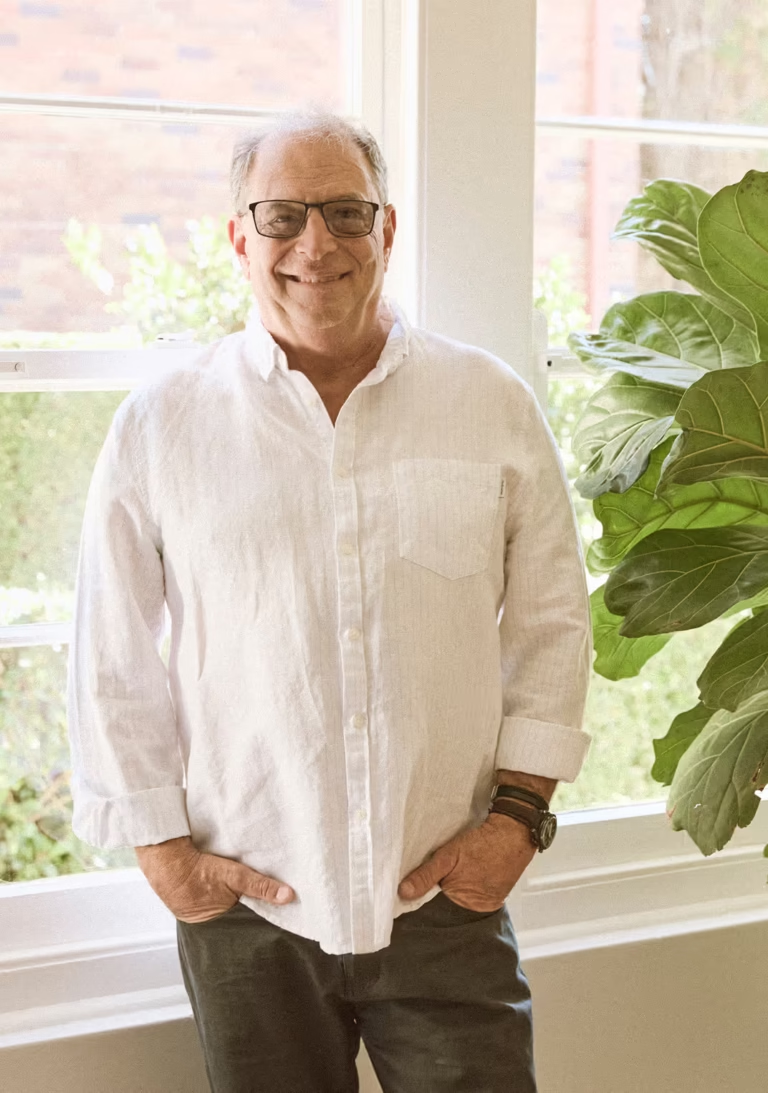
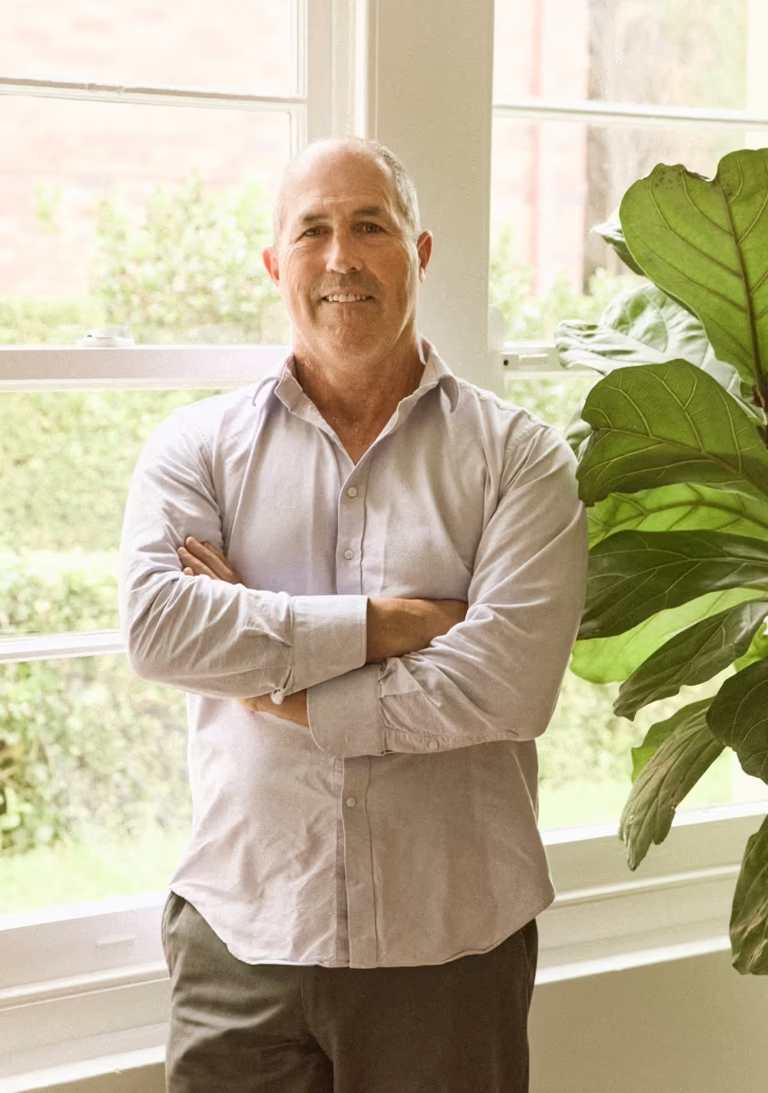
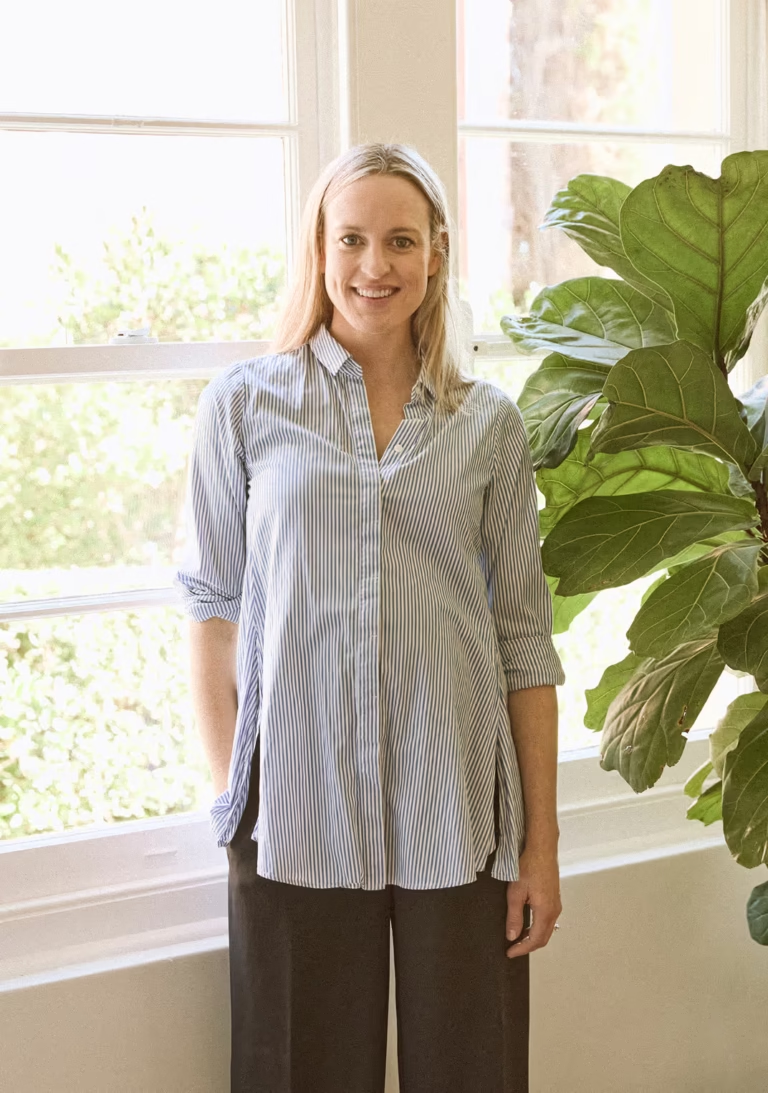
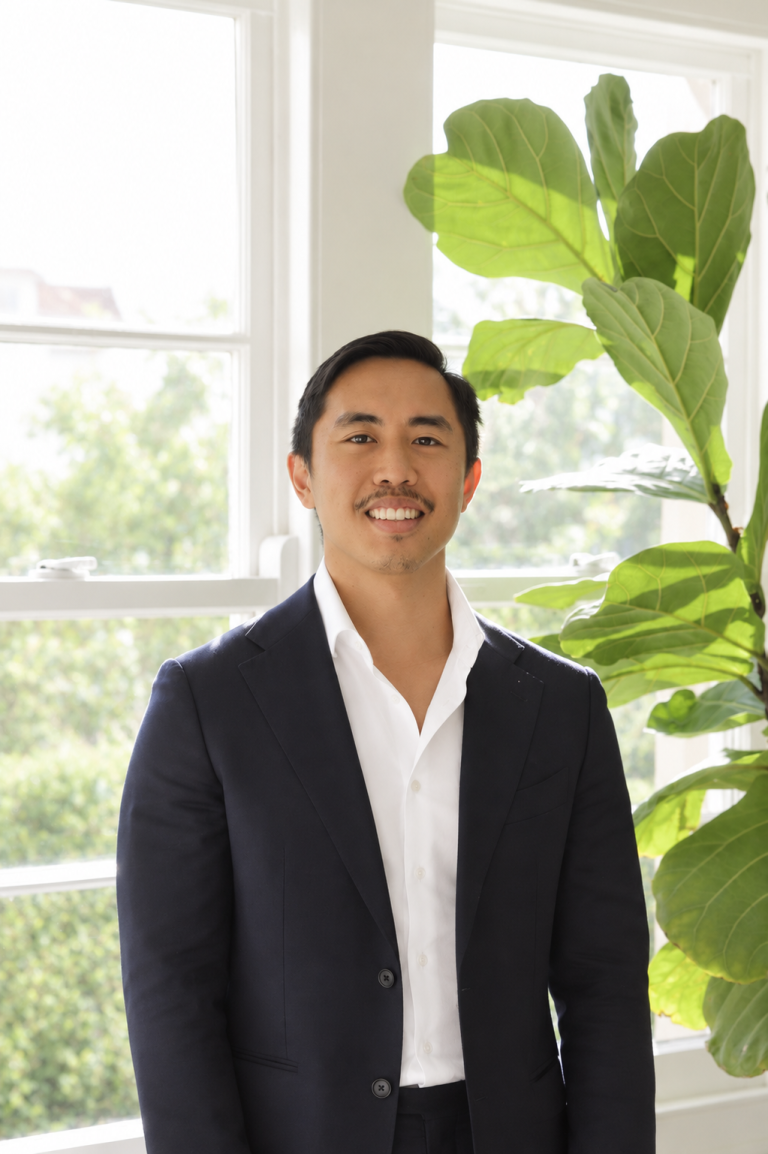
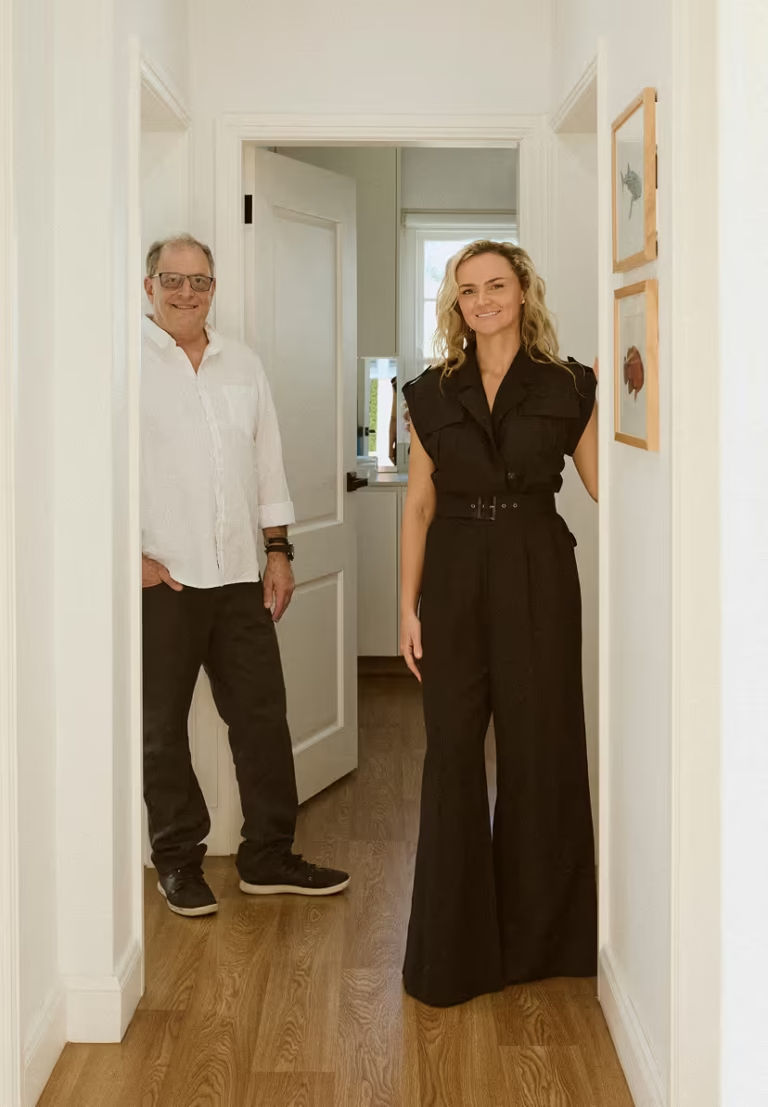
Two of our dentists at Dental Collective

The treatment

How a dental implant works

A dental implant is a small titanium post, placed in the jawbone where the root of the missing tooth once sat. Over the following months the bone forms around its surface and holds it firmly. A connecting piece is then attached, and a crown is made to sit on it among your own teeth.

Because the implant is anchored in bone, the crown does not rely on the teeth beside it. That is the principal difference between an implant and a bridge, and the reason the teeth either side can be left untouched.

CrownAbutmentImplantGumBone
Illustration only, not to scale.

An implant is a surgical procedure, and it does not suit every mouth. A consultation establishes whether it suits yours before anything else is planned.
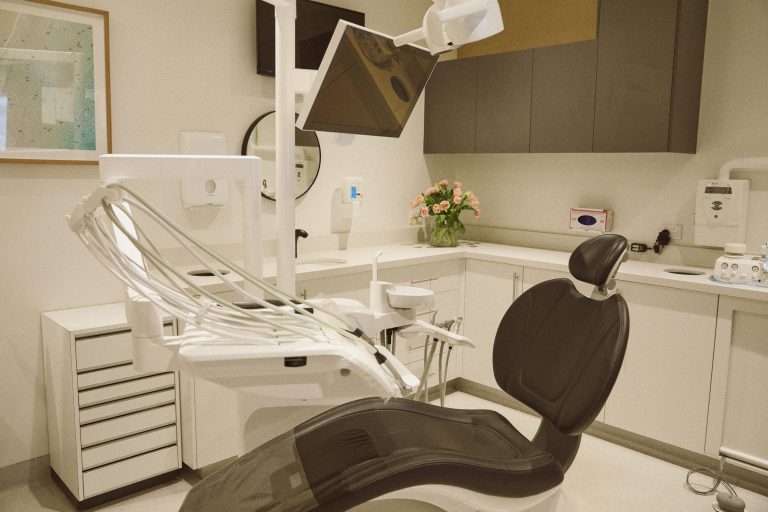
A treatment room at Dental Collective Rose Bay

Planning

Planned in three dimensions

Before an implant is placed, a cone beam CT scan shows the height and width of the bone, the position of the nerve in the lower jaw and the floor of the sinus above the upper back teeth. Those structures determine where an implant can sit, and at what angle.

The implant position can then be planned on screen, and a surgical guide printed to carry that plan into the procedure. The crown itself can be designed from a digital scan of your teeth.

Your consultation can be at either clinic. The 3D imaging is taken at our Rose Bay clinic, where implants are generally placed.

Where the imaging shows too little bone, a graft may be proposed first. Whether a graft is needed, and how it is likely to behave, is discussed before you commit.
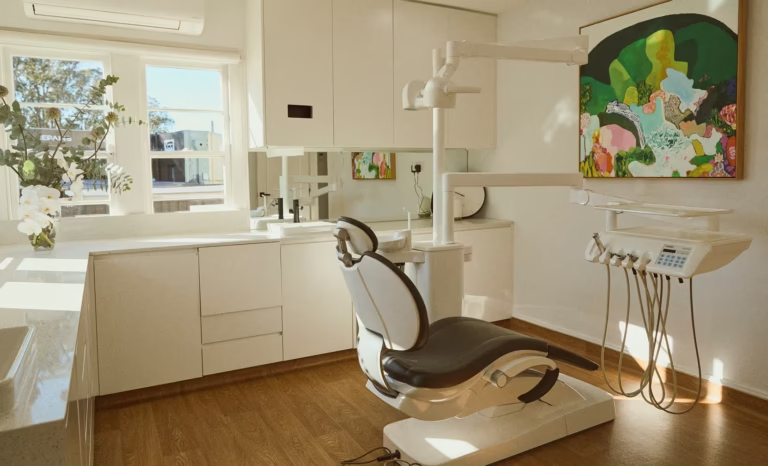
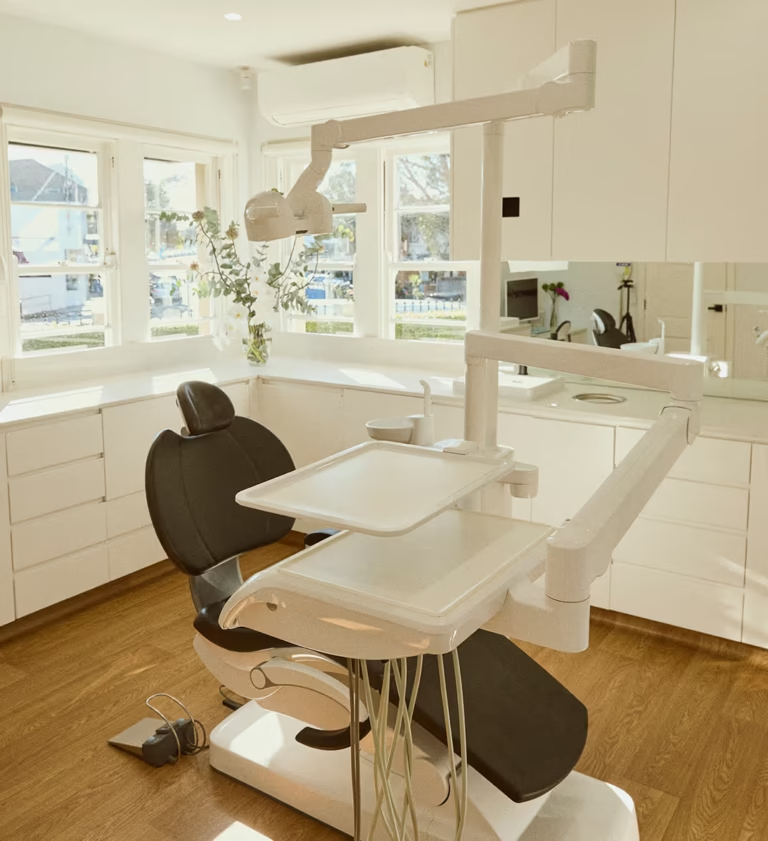
A treatment room at Dental Collective

Beyond a single tooth

Bridges, dentures and full arches on implants

When several teeth are missing, implants do not need to match them one for one. A small number can carry a fixed bridge, or help hold a denture more securely than suction or adhesive alone.

Where every tooth in a jaw is to be replaced, a full-arch rehabilitation uses several implants to support a complete prosthesis. Whether that prosthesis is fixed or removable depends on the bone, the bite and how you prefer to clean and maintain it.

Our dentists are general dentists, not registered specialists. Where the bone, the anatomy or your medical history calls for it, we refer you to a registered specialist oral surgeon, periodontist or prosthodontist.

Your options

Implant or bridge for one missing tooth

For a single gap, the two fixed options are an implant with a crown, or a bridge supported by the teeth on either side. A removable denture is a third option. We provide all three, and the right choice depends on your examination rather than on a general rule.

ConsiderationImplant and crownFixed bridge
Neighbouring teethLeft as they are. The implant stands alone.Reshaped to carry crowns that hold the replacement tooth.
SurgeryA surgical procedure, usually under local anaesthetic.No surgery. Completed with conventional dental appointments.
Time to completionOften several months, while the implant integrates with the bone.Usually a matter of weeks.
Bone requirementsEnough bone to hold the implant, or grafting first.Relies on healthy supporting teeth rather than bone at the gap.
CleaningBrushed and flossed much like a natural tooth.Floss threaders or small brushes are needed beneath the bridge.
Long-term careRegular reviews for the health of the gum and bone around the implant.Regular reviews, with the supporting teeth still exposed to decay.

A general comparison only. The appropriate option for you depends on your clinical assessment.

The process

Your implant treatment, step by step

Implant treatment unfolds over several appointments and, in most cases, several months. Each stage is explained before it begins, and you can pause to consider the plan at any point before surgery.

01

Consultation and examination

At either clinic, we examine the gap, the neighbouring teeth and the gums, review your medical history, and discuss the alternatives with you.

02

3D imaging and planning

A cone beam CT scan and a digital scan allow the implant position to be planned, with a surgical guide printed where appropriate.

03

Preparatory treatment

Any gum treatment or extraction comes first. Where the bone is insufficient, a bone graft may be advised, sometimes with a healing period of its own.

04

Placement

The implant is placed under local anaesthetic, generally at our Rose Bay clinic. If you are anxious about treatment, sedation options can be discussed at your consultation.

05

Integration

The bone forms around the implant over a period that is often several months. A temporary replacement tooth can be arranged where suitable.

06

Fitting the restoration

The final crown, bridge or denture is attached and the bite adjusted, and reviews are scheduled to follow the implants over time.

Aftercare

Looking after an implant

Most of the care an implant needs is the same care your own teeth need, with a few additions in the first weeks.

The first few days

Expect some discomfort, swelling and occasionally bruising for several days. We give you written instructions and advise on pain relief.

Eating while you heal

Soft food, chewed on the other side, for the first days. Avoid very hot drinks until the numbness has worn off.

Daily cleaning

Implant-supported bridges and dentures need careful cleaning underneath and around each implant. We show you the brushes and technique that suit your restoration.

Smoking

Smoking raises the risk of an implant failing, both while it heals and in the years afterwards. We can discuss support for stopping.

Reviews and hygiene visits

Regular examinations and professional hygiene appointments let us check the gum and bone around the implant over time.

Grinding or clenching

Heavy forces at night can loosen or chip the crown. If you grind, we may recommend a night splint, which we provide.

Risks and considerations

Implant placement is a surgical procedure. These are the risks we discuss with every patient, so that you can weigh them before your consultation rather than after it.

Recovery is gradual. Discomfort and swelling commonly last some days, a soft diet is needed initially, and healing takes longer for some patients than others, particularly where several implants or a graft are involved.

Individual results vary, and suitability depends on an individual clinical assessment, including the volume of bone and your general health. Not everyone is a candidate for implants.

Alternatives include a fixed bridge, a removable denture, or leaving the space as it is. For treatment of this kind and cost, we encourage you to seek a second opinion before you proceed.

  • Failure to integrate. The bone may not bond to the implant, or an implant that has integrated may fail later. It may then need removal and, in some cases, replacement.
  • Infection at the implant site, during healing or afterwards.
  • Bleeding, swelling and bruising after surgery, usually settling over several days.
  • Nerve injury. Injury to a nerve can cause altered sensation or numbness of the lip, chin or tongue. This is usually temporary but can occasionally be permanent.
  • Sinus complications when implants are placed in the upper back jaw, close to the floor of the sinus.
  • Damage to neighbouring teeth or their roots during placement.
  • Bone graft failure, where a graft is needed before or during placement.
  • Peri-implantitis. Inflammation of the gum and bone around the implant over the long term, more likely with smoking, diabetes or inadequate cleaning.
  • Wear of components. Crowns, bridges, dentures and their fixings can loosen, chip or need replacing over the years.

Fees

Dental implant cost and health funds

Implant fees range widely, from a single crown to a full arch, so a figure is only meaningful once we have examined you and reviewed your imaging. Every fee is stated before any health fund rebate.

Your written, itemised quote breaks the plan into its stages, from imaging to the final restoration, so the cost of each is clear before you agree to anything.

If preparatory treatment such as an extraction or a graft is needed, it appears as a separate line. For larger cases we can also set out the cost of the alternatives, such as a bridge or a conventional denture, side by side.
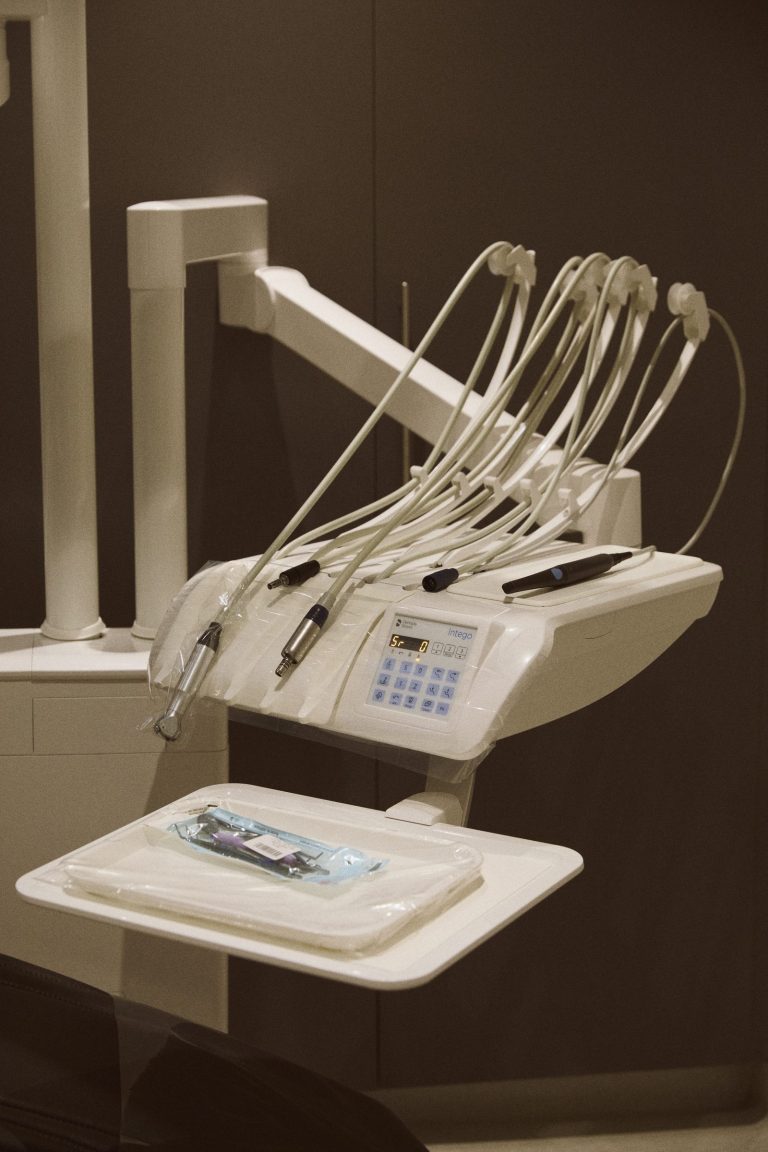
A dental unit at Dental Collective Rose Bay

What determines the fee

  • How many implants. A full arch needs several, a single tooth one.
  • Extractions and bone grafting, where teeth must be removed or bone added first.
  • The final restoration. A crown, an implant-supported bridge and an implant-retained denture are priced differently.
  • Imaging and planning, covering the cone beam CT scan, the digital plan and any surgical guide.

Health funds and Medicare

Implants usually fall under major dental cover. Rebates and annual limits vary considerably between funds and policies, and waiting periods apply. We can provide the item numbers so that your fund can confirm your rebate.

Medicare generally does not cover dental implants.

Our dentists

Dental Collective is one practice across two locations, and implant consultations are available at either. Who plans your treatment is confirmed at your first appointment.

Our clinics

Implant consultations can be booked at either clinic, online, by phone, or through the enquiry form below.

Dental implants: your questions answered

How much does a dental implant cost?

It depends on the number of implants, whether an extraction or bone graft is needed, the type of restoration, and the imaging and planning involved. Fees are quoted before any health fund rebate.

You receive a written, itemised quote after your consultation and imaging, before any treatment is booked.

Are implants covered by my health fund or Medicare?

Most funds treat implants as major dental, with their own limits and waiting periods. We can give you the item numbers to check your rebate with your fund.

Medicare generally does not cover dental implants.

Can I have my implant consultation in Vaucluse?

Yes. Implant consultations are available at both our Vaucluse and Rose Bay clinics. The 3D imaging is taken at Rose Bay, where implants are generally placed.

Am I suitable for a dental implant?

Suitability depends on the volume of bone at the gap, the health of your gums, and your general health, including smoking and conditions such as diabetes. A clinical examination and 3D imaging establish whether an implant is appropriate, and whether any preparatory treatment would be needed.

Should I choose an implant or a bridge for one missing tooth?

An implant leaves the neighbouring teeth untouched but involves surgery and a longer timeline. A bridge avoids surgery but requires the teeth either side to be reshaped. We set out both, together with a denture, so that you can decide with the full picture.

Can implants hold my denture in place?

Often, yes. Two or more implants can be used to anchor a denture so that it is held more securely when you eat or speak. Whether your existing denture can be adapted, or a new one is needed, is assessed at your consultation.

What is a full-arch rehabilitation?

It replaces all the teeth in one jaw with a prosthesis supported by several implants. It suits some patients whose remaining teeth cannot be kept, and it involves careful planning, surgery and a period of healing.

How long does implant treatment take?

From placement to the final crown usually takes several months, because the bone needs time to form around the implant. Where grafting is required first, the overall timeline is longer. You will have an estimate once your imaging has been reviewed.

Can an implant be placed when a tooth is removed?

Sometimes. Immediate placement at the time of extraction is possible where there is no active infection and enough bone remains to hold the implant firmly. Otherwise the site is left to heal first.

Does implant surgery hurt?

The procedure is carried out under local anaesthetic. Tenderness, swelling and sometimes bruising are common for several days afterwards and are usually managed with ordinary pain relief. Sedation options can be discussed if you are anxious.

Are your dentists implant specialists?

No. Our dentists are general dentists, and none holds specialist registration. General dentists may place implants, and you are entitled to know which you are seeing.

Where your case calls for it, we refer you to a registered specialist oral surgeon, periodontist or prosthodontist.

Arrange an implant consultation

Tell us about the tooth or teeth you would like to replace, and which clinic suits you, and a member of our team will be in touch.

Vaucluse and Rose Bay

Replacing a tooth starts with a consultation.

Book online at either clinic, or call and our team will arrange a time that suits you.