Clear aligner treatment (Invisalign, Spark)

Clear aligner treatment in Vaucluse and Rose Bay

Invisalign and Spark clear aligners for adults and teenagers, with consultations and treatment at either of our clinics. Treatment is planned from a digital scan and reviewed at every stage, and every case begins with a consultation, so that any treatment we propose rests on a proper diagnosis.
  • Two clinicsVaucluse and Rose Bay
  • AssessmentExamination, digital scan and x-rays
  • Your quoteWritten and itemised, before treatment
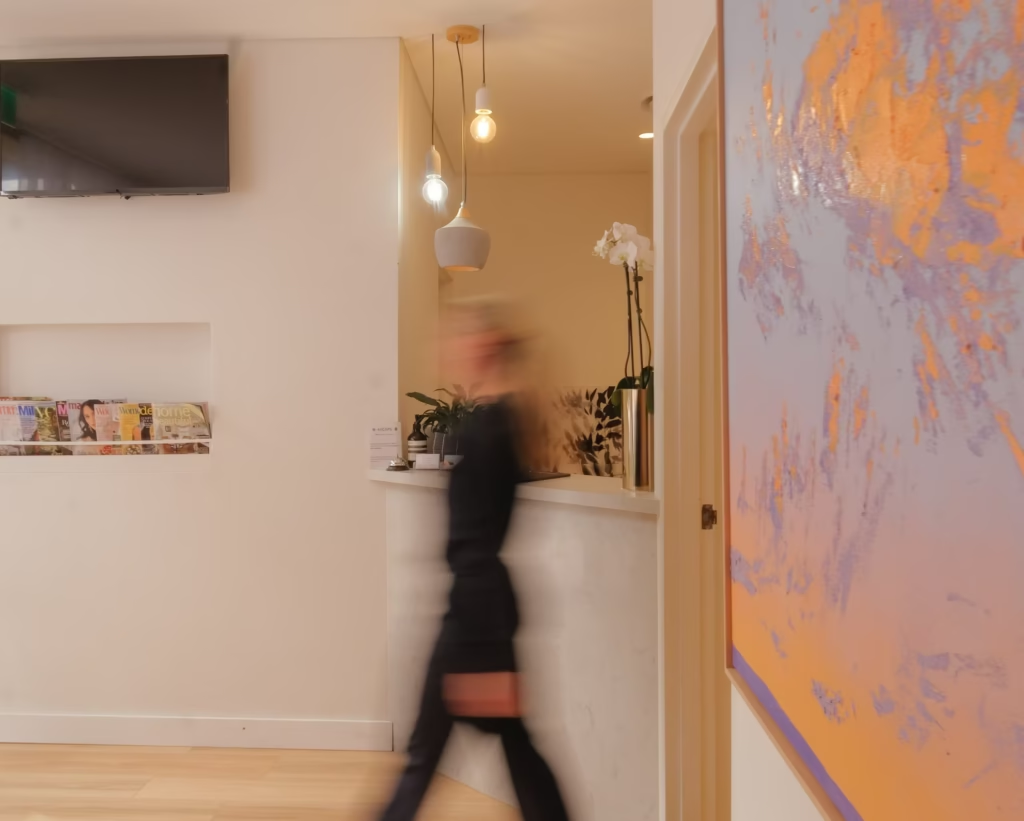
Reception at Dental Collective Rose Bay
  • 20 to 22Hours a day aligners are worn
  • 3DTreatment planned from a digital scan
  • WrittenAn itemised quote before treatment begins
  • 2Clinics, with treatment at either

Suitability

What clear aligners can treat

Clear aligners can correct a range of alignment and bite concerns. Whether they are the right choice for yours, or whether braces would be more predictable, is decided at your assessment.

Crowding

Where there is not enough space for the teeth to sit in line, so that they overlap or turn.

Spacing

Spaces between the teeth, including those that have opened gradually over time.

Overbite

Where the upper front teeth overlap the lower front teeth more deeply than they should.

Underbite

Where the lower front teeth sit ahead of the upper teeth when you bite together.

Crossbite

Where some of the upper teeth sit inside the lower teeth when you bite together.

Open bite

Where the front teeth do not meet when the back teeth are closed together.

Severe crowding, significant bite discrepancies and concerns arising from the position of the jaws may be better treated with fixed braces, or by a registered specialist orthodontist. Where that applies, we arrange a referral.

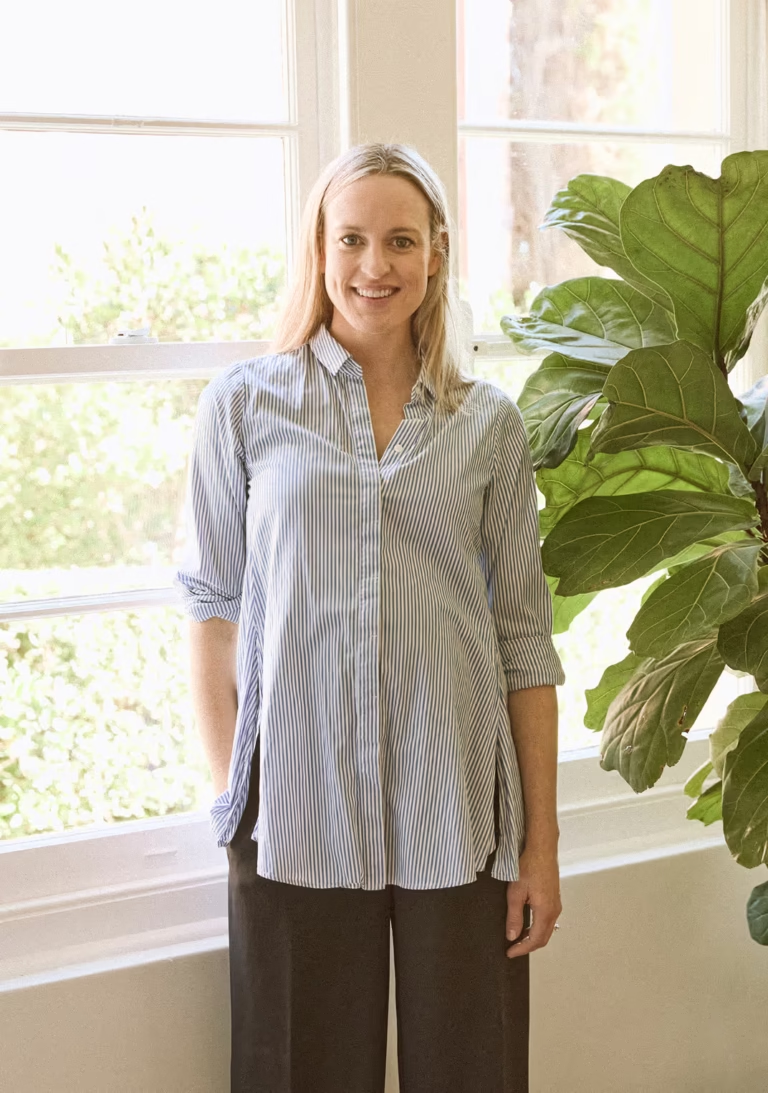
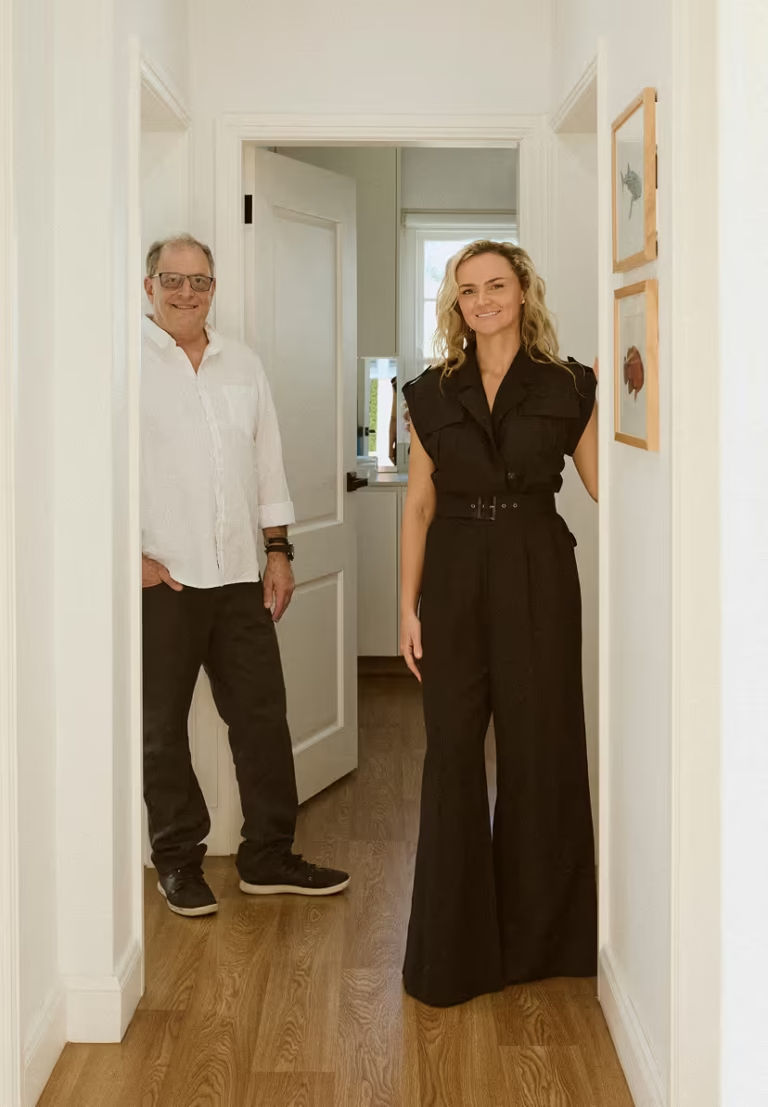
Two of our dentists at Dental Collective

The treatment

How clear aligner treatment works

Invisalign and Spark are both clear aligner systems, and both work on the same principle: a sequence of thin, transparent trays, each fabricated to fit your teeth and each shaped a fraction differently from the last. Worn in turn, they apply steady, controlled pressure that moves the teeth gradually toward their planned positions.

The sequence is planned in advance from a 3D digital scan, so the proposed movements can be discussed with you before treatment begins. Small tooth-coloured attachments are usually bonded to some teeth to give the trays purchase, and are removed when treatment concludes.

AlignerAttachmentToothGum
Illustration only, not to scale.

A digital treatment plan is a planning tool and a guide to the intended movements. It is not a representation of your final result.
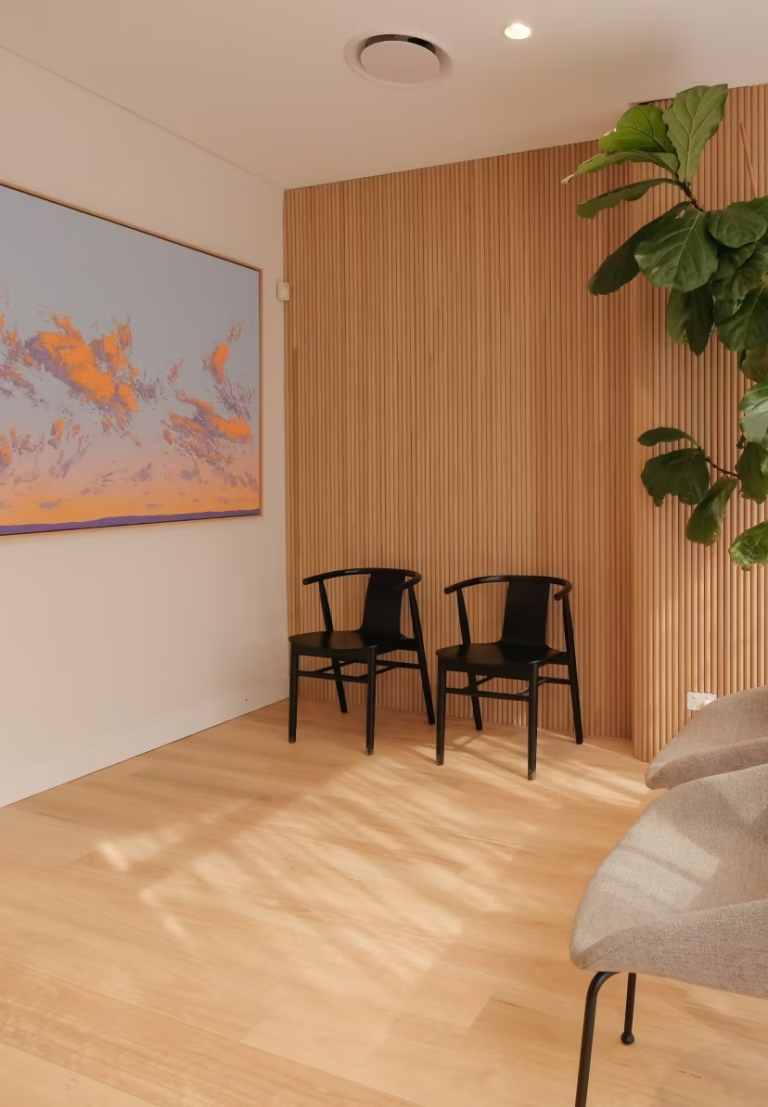
Waiting room at Dental Collective Rose Bay

Who it suits

Adults and teenagers

Aligners are well suited to mild and moderate crowding, to closing modest spaces, and to teeth that have drifted since earlier orthodontic treatment. They suit adults whose work calls for discretion, and teenagers who can commit to consistent daily wear.

Because aligners are removed to eat and to clean, they work only while they are worn. An honest view of whether you will wear them for 20 to 22 hours a day matters as much as the clinical assessment.

Our dentists are general dentists rather than registered specialist orthodontists. Where a case calls for a specialist, we arrange a referral.
A window at Dental Collective, with fresh flowers

For adults

Straightening teeth as an adult

There is no upper age limit for moving teeth. For adults, the condition of the gums and supporting bone, and any existing crowns, bridges or implants, matter far more than age, which is why x-rays form part of every assessment.

Many adult cases involve teeth that have moved since braces years ago, and these are often limited in scope.

Your options

Clear aligners or braces

Both move teeth by the same biological process. They differ in what they can correct, what they ask of you, and how visible they are. We provide both, in metal and tooth-coloured ceramic.

ConsiderationClear alignersFixed braces
AppearanceClose to invisible in conversation. Attachments are visible at close range.Visible. Tooth-coloured ceramic brackets are less conspicuous than metal.
RemovableYes. Effective only while worn, 20 to 22 hours a day.No. Nothing to remember and nothing to misplace.
EatingAligners come out, so there are no restrictions on what you eat.Hard and sticky foods are avoided for the length of treatment.
Oral hygieneBrush and floss as normal with the aligners out.Brackets and wires trap plaque, so cleaning takes longer.
Complex movementMore limited with severe rotations and large vertical changes.More predictable across a wider range of tooth movements.
AppointmentsProgress reviews at intervals set by your dentist.Regular adjustment appointments throughout treatment.

A general comparison. Which suits you depends on an examination.

The process

Your clear aligner treatment, step by step

Each stage is planned and explained before it begins, from the first consultation to long-term retention. Comprehensive treatment commonly runs 18 to 24 months; limited cases can conclude in around six.

01

Initial consultation

Your first visit, at either clinic, is a free, limited examination to assess your concerns and whether clear aligners are suitable, with a more accurate indication of cost.

02

Records and diagnosis

Photographs, a digital scan and x-rays show root position, bone levels and gum health, and establish whether aligners can achieve the movement needed. If they cannot, we will tell you.

03

A written estimate

An itemised treatment plan and quote before treatment begins, setting out the full commitment, including retention once treatment concludes.

04

Fitting

Any preparatory treatment is completed first. Attachments are then placed and your first aligners fitted, with clear guidance on wear and care.

05

Progress reviews

Regular appointments confirm that your teeth are tracking to plan. Additional refinement aligners are sometimes needed to complete the final movements.

06

Retention

When active treatment concludes, retainers are fitted. Teeth continue to shift throughout life, so retainers are worn long term to maintain alignment.

Day to day

Living with clear aligners

Aligners fit around daily life more readily than braces, provided a few habits become routine.

Wear time

Aligners are worn for 20 to 22 hours a day, including overnight. Treatment takes longer when they are worn less, which is the most common cause of delay.

Eating and drinking

Aligners are removed to eat and to drink anything other than water, then replaced once your teeth are clean.

Caring for your aligners

Rinse and clean your aligners each time they come out, and store them in their case rather than wrapping them in a napkin.

Speech

Some patients notice a slight change in speech for the first few days while the tongue adapts. It usually settles quickly.

Attachments

Small tooth-coloured attachments help the trays grip. They are visible at close range and are removed when treatment concludes.

A lost or damaged aligner

Contact the clinic. Depending on where you are in the sequence, we will advise whether to continue with the next set or wait for a replacement.

Risks and considerations

Orthodontic treatment is routine, and it still carries risks. We set them out here so that you can weigh them before your consultation, not after it.

Individual results vary, and suitability depends on an individual clinical assessment. Not everyone is a candidate for clear aligners.

Alternatives include fixed braces, limited treatment of the front teeth only, or leaving the teeth as they are. We encourage you to seek a second opinion before beginning any treatment of this length and cost.

  • Relapse. Teeth tend to move back toward their original positions. Without long-term use of retainers, some relapse is likely.
  • Root resorption. Roots can shorten during tooth movement. This is usually minor, occasionally significant, and not fully predictable.
  • Gum inflammation and recession, particularly where hygiene is difficult or the gums were already compromised.
  • Decalcification. Permanent white marks can form where plaque sits against the enamel, which is why hygiene during treatment matters.
  • Discomfort. Pressure and tenderness are common for a few days after each new set of aligners.
  • Loss of vitality in a previously injured tooth, which may then require root canal treatment.
  • Jaw joint symptoms, which may improve, worsen or remain unchanged during treatment.

Fees

Clear aligner cost and health funds

Clear aligner treatment typically costs between $6,500 and $8,500, depending on how complex the case is and how long treatment runs. All fees are quoted before any health fund rebate.

Your initial consultation is free. It is a limited examination to assess your concerns and your suitability for aligners, and it allows us to give you a more accurate indication of cost.

Once your records have been taken, you receive a written, itemised quote setting out exactly what the fee includes, before any treatment begins.
Artwork and orchids at Dental Collective Rose Bay

What determines the fee

  • The extent of movement. The principal factor. More movement means more aligners and more clinical time.
  • Duration. The fee follows the length of treatment closely.
  • One arch or both, and the complexity of the case.
  • Preparatory treatment, such as fillings or gum care required before teeth are moved, which is quoted separately.
  • Retainers, which are an ongoing part of care rather than a single cost.

Health funds and Medicare

Orthodontic cover usually sits under a separate lifetime limit with its own waiting period, and it varies considerably between funds. We can provide the relevant item numbers so that your fund can confirm your rebate.

Medicare generally does not cover orthodontic treatment, and orthodontics is excluded from the Child Dental Benefits Schedule.

Our dentists

Dental Collective is one practice across two locations, and clear aligner consultations and treatment are available at both our Vaucluse and Rose Bay clinics.

Our clinics

Appointments can be arranged at either clinic, online, by phone, or through the enquiry form below.

Clear aligners: common questions

Am I suitable for clear aligners?

Suitability depends on how far your teeth need to move and in which direction, together with the health of your gums and any existing dental work.

An examination, a digital scan and x-rays establish whether clear aligners can achieve what you are hoping for, or whether fixed braces would be more predictable.

Do you offer Invisalign or Spark?

Both. Invisalign and Spark are clear aligner systems that work on the same principle: a series of removable trays, planned from a digital scan.

Which system we recommend depends on your case, and we explain the reasons at your consultation.

Can I have my aligner treatment at either clinic?

Yes. Clear aligner consultations and treatment are available at both our Vaucluse and Rose Bay clinics. Mention the clinic that suits you when you book.

How long does clear aligner treatment take?

It depends on the case. Limited treatment of minor relapse can conclude in around six months, while comprehensive treatment more commonly runs 18 to 24 months.

We give you an estimate once your records have been assessed.

How much do clear aligners cost?

Clear aligner treatment, with Invisalign or Spark, typically costs between $6,500 and $8,500, depending on the complexity and length of treatment. Fees are quoted before any health fund rebate.

Your initial consultation is free: a limited examination that allows us to give you a more accurate indication of cost. Your written, itemised quote follows once records have been taken.

Are clear aligners covered by Medicare or my health fund?

Medicare generally does not cover orthodontic treatment, and orthodontics is excluded from the Child Dental Benefits Schedule.

Many private health funds include orthodontic cover under a separate lifetime limit. We can provide item numbers so that your fund can confirm your rebate.

Is clear aligner treatment uncomfortable?

Pressure and tenderness are common for a few days after each new set of aligners, and usually settle with ordinary pain relief. We do not describe any treatment as painless.

Can I wear aligners only at night?

No. Aligners need to be worn for 20 to 22 hours a day. Night-only wear does not provide enough sustained pressure to move teeth as planned.

I had braces as a teenager and my teeth have moved. Can aligners help?

Often, yes. Relapse of this kind is frequently limited in scope, so treatment can be considerably shorter than the original.

Wearing retainers afterwards is what stops it happening again.

Do you provide clear aligners for teenagers?

Yes. Clear aligners suit many teenagers, provided they can commit to consistent daily wear. Where fixed braces would be more reliable, we will recommend them.

Are your dentists orthodontists?

No. Our dentists are general dentists rather than registered specialist orthodontists. General dentists can provide orthodontic treatment, and you are entitled to know which qualification you are being treated under.

Where a case calls for a specialist, we arrange a referral.

Will my teeth move back after treatment?

Teeth continue to shift throughout life. Retainers maintain alignment once treatment concludes and are worn long term, so we discuss retention with you before treatment begins.

Arrange an assessment

Share what you would like to address, and which clinic suits you, and a member of our team will be in touch.

Vaucluse and Rose Bay

Begin with an assessment.

Book online at either clinic, or call and our team will arrange a time that suits you.

Invisalign is a trade mark of Align Technology, Inc. Spark is a trade mark of Ormco Corporation.